
BMR Calculator: Free Basal Metabolic Rate & Daily Calorie Calculator
Use this free BMR calculator to find your Basal Metabolic Rate—the calories your body burns at complete rest—then turn that number into real daily calorie targets for losing weight, gaining muscle, or maintaining. Enter your details in kg or lb, pick your preferred formula, and get your BMR, TDEE, and calorie-deficit targets in seconds, along with BMR charts by age and gender further down the page.
Medically-informed content, reviewed against primary sources. Last reviewed: 15 October 2026.
Calculate Your BMR Now(Metric & Imperial Calculator)
BMR Calculator
Basal Metabolic Rate, TDEE and daily calorie targets
| Goal | Daily calories |
|---|---|
| Maintain weight | 0 |
| Mild loss (about 0.25 kg/week) | 0 |
| Weight loss (about 0.5 kg/week) | 0 |
| Faster loss (about 0.75 kg/week) | 0 |
| Mild gain (lean bulk) | 0 |
| Weight gain | 0 |
Estimates use your selected formula. Weight-loss targets assume roughly 7,700 calories per kg. Do not eat below your BMR for long periods without medical guidance — see the disclaimer below.
Disclaimer :This BMR calculator provides estimates based on validated clinical equations (Mifflin-St Jeor, Harris-Benedict, and Katch-McArdle) for informational purposes only. It does not replace professional medical advice, diagnosis, or personalized nutritional counseling. Energy needs can fluctuate due to hormonal changes, thyroid function, muscle mass, and health conditions. Always consult a board-certified physician or registered dietitian before starting an aggressive calorie-deficit diet.
How to Use This BMR Calculator
Choose Metric (kg, cm) or Imperial (lb, ft), then enter your gender, age, height, and weight. Pick a formula—Mifflin-St Jeor is the default and most accurate for most people, Harris-Benedict is the classic alternative, and Katch-McArdle is best if you know your body fat percentage. Select an activity level and the calculator instantly returns three things: your BMR (calories at rest), your TDEE (total daily calories including activity), and a table of calorie targets for losing weight, maintaining, or gaining. Recalculate every 4 to 6 kg of weight change so your numbers stay accurate.
What Is BMR (Basal Metabolic Rate)?
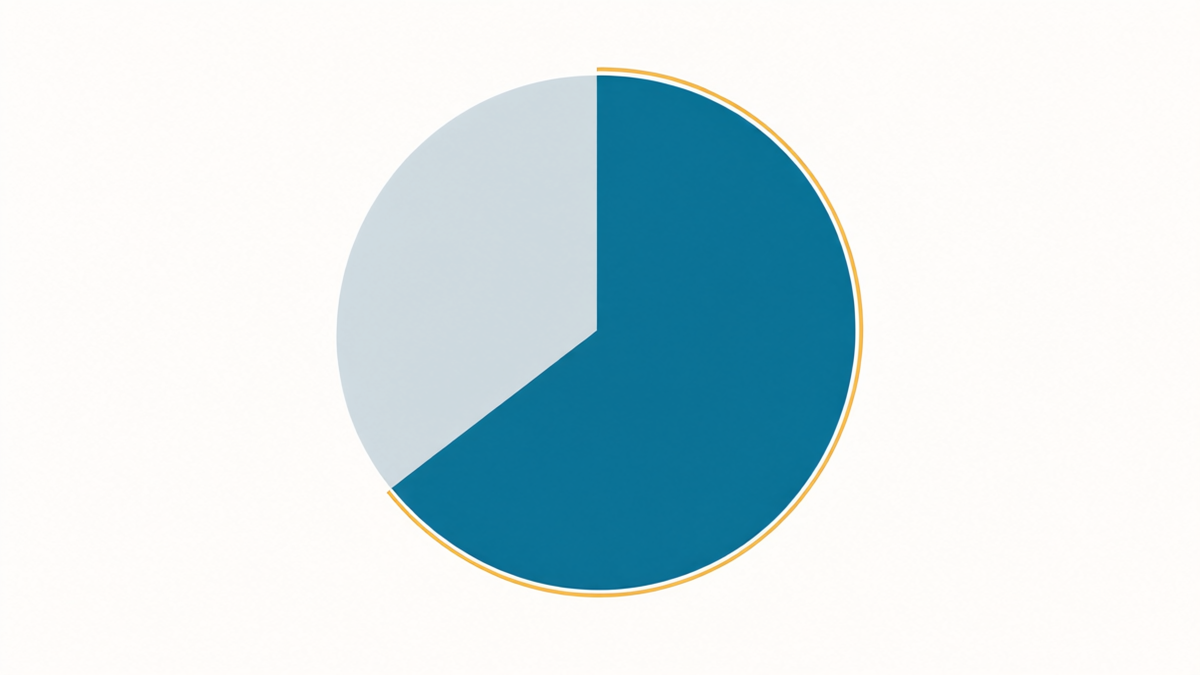
Your Basal Metabolic Rate (BMR) is the minimum number of calories your body needs to keep you alive at complete rest—powering breathing, blood circulation, cell repair, and body temperature. According to the Cleveland Clinic, BMR accounts for roughly 60% to 70% of the calories you burn every day, with about 10% used to digest food and the remainder spent on movement. That makes BMR the single biggest piece of your daily calorie budget—and the reason it is the starting point for any diet or fitness plan.
BMR and RMR (Resting Metabolic Rate) are often used interchangeably. Technically BMR is measured under strict lab conditions after an overnight fast, while RMR is slightly higher and easier to measure—but for everyday planning the difference is small and this calculator's estimate works for both.
How to Calculate BMR: The Formulas
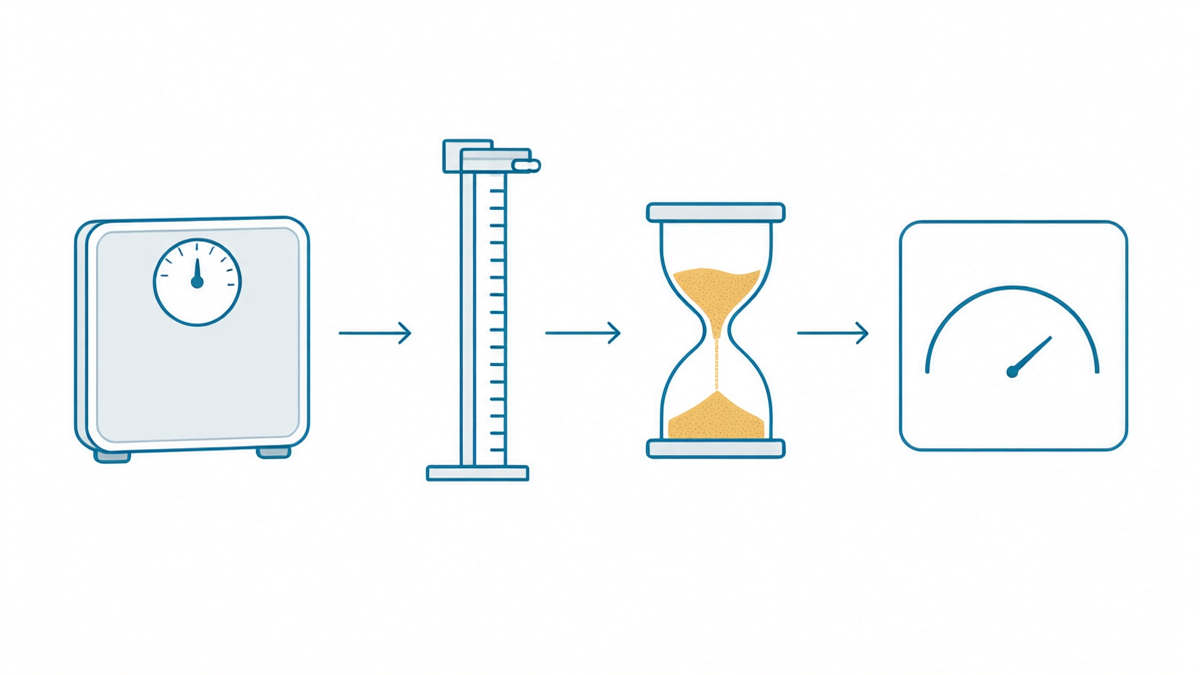
This calculator uses three validated equations (weight in kg, height in cm, age in years):
1. Mifflin-St Jeor (recommended):
Men: (10 × weight) + (6.25 × height) − (5 × age) + 5
Women: (10 × weight) + (6.25 × height) − (5 × age) − 161
Published in The American Journal of Clinical Nutrition in 1990, the Mifflin-St Jeor equation was derived from 498 healthy adults and is widely considered the most accurate predictive formula for the general population. The same study found the older Harris-Benedict equations overestimated resting energy expenditure by about 5%.
2. Revised Harris-Benedict:
Men: 88.362 + (13.397 × weight) + (4.799 × height) − (5.677 × age)
Women: 447.593 + (9.247 × weight) + (3.098 × height) − (4.330 × age)
3. Katch-McArdle (most accurate if you know body fat %):
BMR = 370 + (21.6 × lean body mass in kg), where lean body mass = weight × (1 − body fat% / 100). Because it is based on lean mass—the best single predictor of resting energy use—it can be more accurate for very lean or very muscular people.
BMR Chart by Age and Gender
BMR falls as we age, mostly because we lose muscle. The charts below use the Mifflin-St Jeor formula so you can see typical values. They are reference estimates only—use the calculator above for your exact number.
Average BMR for men (reference: 178 cm / 5'10", 80 kg / 176 lb):
| Age | Estimated BMR (cal/day) |
|---|---|
| 20 | 1,818 |
| 30 | 1,768 |
| 40 | 1,718 |
| 50 | 1,668 |
| 60 | 1,618 |
| 70 | 1,568 |
Average BMR for women (reference: 165 cm / 5'5", 65 kg / 143 lb):
| Age | Estimated BMR (cal/day) |
|---|---|
| 20 | 1,420 |
| 30 | 1,370 |
| 40 | 1,320 |
| 50 | 1,270 |
| 60 | 1,220 |
| 70 | 1,170 |
BMR Chart by Weight (kg)
Typical BMR for a 30-year-old at an average height (men 178 cm, women 165 cm):
| Weight | Men — BMR | Women — BMR |
|---|---|---|
| 50 kg | — | 1,220 |
| 60 kg | 1,568 | 1,320 |
| 70 kg | 1,668 | 1,420 |
| 80 kg | 1,768 | 1,520 |
| 90 kg | 1,868 | 1,620 |
| 100 kg | 1,968 | — |
Mifflin-St Jeor BMR Calculator
By default this is a Mifflin-St Jeor BMR calculator, the equation clinicians and dietitians rely on most. To work it out by hand (weight in kg, height in cm, age in years): men use (10 × weight) + (6.25 × height) − (5 × age) + 5, and women use the same with − 161 instead of + 5. Switch the formula dropdown in the tool to compare Mifflin-St Jeor against Harris-Benedict or Katch-McArdle. The equation comes from the 1990 study in The American Journal of Clinical Nutrition (Mifflin-St Jeor).
Which Is the Most Accurate (and Best) BMR Calculator?
The most accurate BMR calculator for the general population is one built on the Mifflin-St Jeor equation—the original 1990 research found it predicted resting energy use more closely than the older Harris-Benedict equations, which overestimated by about 5%. So the best BMR calculator for you depends on what you know: use Mifflin-St Jeor if you only have height, weight, age, and sex; switch to Katch-McArdle (which this tool also offers) if you know your body-fat percentage, since it is based on lean mass—the single best predictor of resting metabolism. All three options are built into the calculator above so you can compare them instantly.
BMR Calculator for Women
A BMR calculator for women uses the female version of the Mifflin-St Jeor equation: (10 × weight in kg) + (6.25 × height in cm) − (5 × age) − 161. For example, a 35-year-old woman at 68 kg and 163 cm has a BMR of about 1,363 calories. Women generally have a lower BMR than men of the same height and weight because they carry proportionally more body fat and less muscle, and muscle burns more energy at rest—a difference the Cleveland Clinic attributes mainly to body composition. See the women's values in the BMR chart by age above, or enter your own details in the calculator (set gender to Female).
BMR Calculator for Men
A BMR calculator for men uses the male Mifflin-St Jeor equation: (10 × weight in kg) + (6.25 × height in cm) − (5 × age) + 5. For example, a 35-year-old man at 82 kg and 180 cm has a BMR of about 1,775 calories. Because men typically have more lean muscle, their resting calorie burn runs roughly 5–10% higher than women of similar size. Use the men's column in the BMR chart above as a quick reference, or run your exact figures through the calculator (set gender to Male) and choose your activity level for your TDEE.
Can You Lose Weight Without Exercise Using Your BMR?
Yes. Weight loss depends on sustained energy balance, and diet is usually the larger lever of the two. That does not make activity optional: the WHO recommends 150 to 300 minutes of moderate aerobic activity per week for adults aged 18 to 64, plus muscle-strengthening work on 2 or more days a week, independently of weight goals. Set your activity level to Sedentary (BMR × 1.2) to get your no-exercise TDEE, then compare that figure with what you actually eat. NICE sets the reference rate of weight loss at most 0.5 to 1 kg per week, and a sustained intake below your BMR is something to undertake only with professional supervision. Exercise simply widens the deficit and helps preserve muscle, but a consistent dietary deficit is what produces fat loss. For a food-focused plan, pair this with our Calorie Calculator.
BMR vs TDEE: Which Should You Use to Lose Weight?
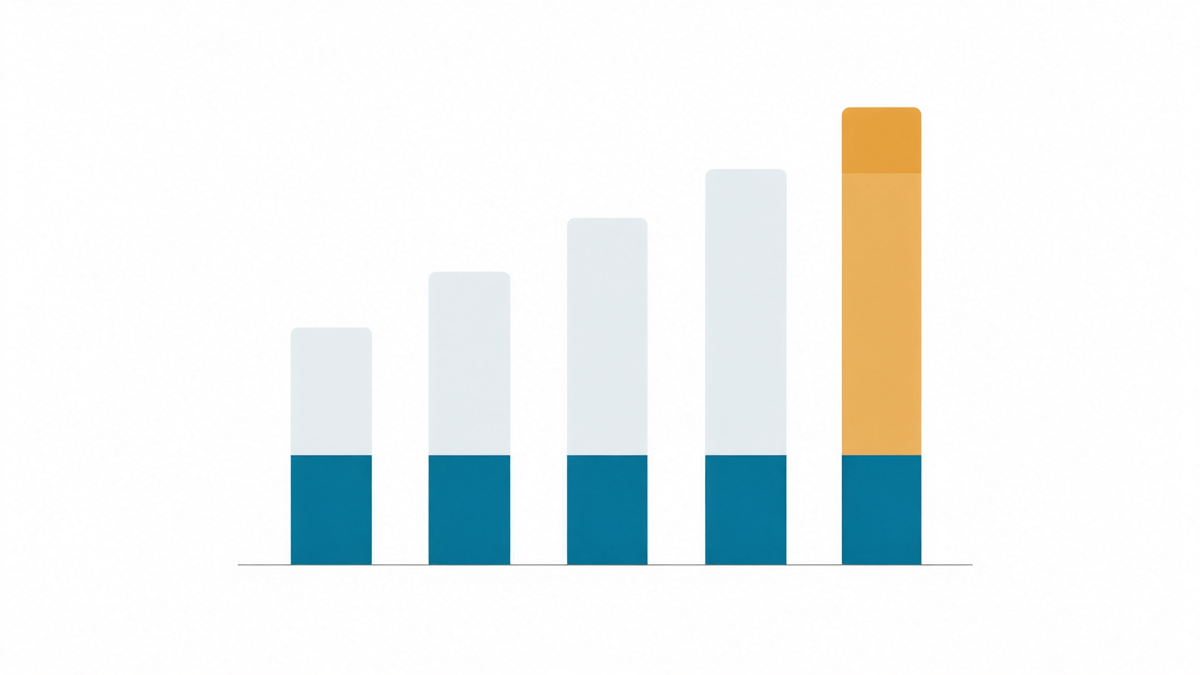
BMR is your baseline at rest. TDEE (Total Daily Energy Expenditure) is the number that actually matters for weight change, because it adds the calories you burn through daily activity and exercise. You get TDEE by multiplying BMR by an activity factor:
| Activity level | Multiply BMR by |
|---|---|
| Sedentary (desk job, little exercise) | 1.2 |
| Lightly active (1 to 3 days/week) | 1.375 |
| Moderately active (3 to 5 days/week) | 1.55 |
| Very active (6 to 7 days/week) | 1.725 |
| Extra active (hard training / physical job) | 1.9 |
To lose weight, use TDEE, not BMR. Subtract 300 to 500 calories from your TDEE for a steady loss of about 0.25 to 0.5 kg per week—but try not to eat below your BMR for long periods. For a full breakdown of maintenance calories, try our Calorie Calculator, and to check your weight status use the BMI Calculator. As a reference point, the NHS notes an average man needs about 2,500 kcal and an average woman about 2,000 kcal per day to maintain weight.
Worked Examples (Common Questions)
If my BMR is 1,400, how much should I eat to lose weight? If you are lightly active, your TDEE is roughly 1,400 × 1.375 ≈ 1,925 calories. A 500-calorie deficit means eating about 1,425 calories—right around your BMR, which sits close to your BMR. Rather than a fixed calorie floor, NICE states the target as a rate of loss — at most 0.5 to 1 kg (about 1 to 2 lb) per week, and notes that keeping off around 5% of body weight already brings measurable benefit. A sustained intake below your BMR is something to undertake only with professional supervision.
If my BMR is 1,500? Lightly active TDEE ≈ 2,060. Eat about 1,550 to 1,600 for a safe deficit that stays at or just above your BMR.
If my BMR is 2,500? Moderately active TDEE ≈ 3,875. A 500-calorie deficit is about 3,375; even a larger 750-calorie deficit (≈ 3,125) stays well above your BMR, so you have plenty of room to lose weight comfortably.
If I eat 1,400 calories and burn 500 through exercise, am I in a deficit? Yes—if your TDEE is higher than your net intake. Net calories = food eaten − exercise burned. Eating 1,400 and burning 500 leaves a net of 900 against a TDEE that is usually 1,800 to 2,400, so you are in a sizeable deficit. Just make sure your food intake alone does not drop far below your BMR.
What Is a Good BMR? Normal Ranges Explained
There is no single "good" BMR—it depends on your size, age, sex, and muscle mass. Broadly, adult men average around 1,600 to 1,900 calories and women around 1,300 to 1,500 calories at rest. A higher BMR simply means a larger or more muscular body burning more energy; it is not "better" or "worse." What matters is knowing your number and eating relative to it. If your BMR seems far below the ranges above and you feel constantly tired or cold, it is worth speaking to a doctor, as the Cleveland Clinic notes thyroid function and other medical factors can affect metabolic rate.
5 Factors That Affect Your BMR
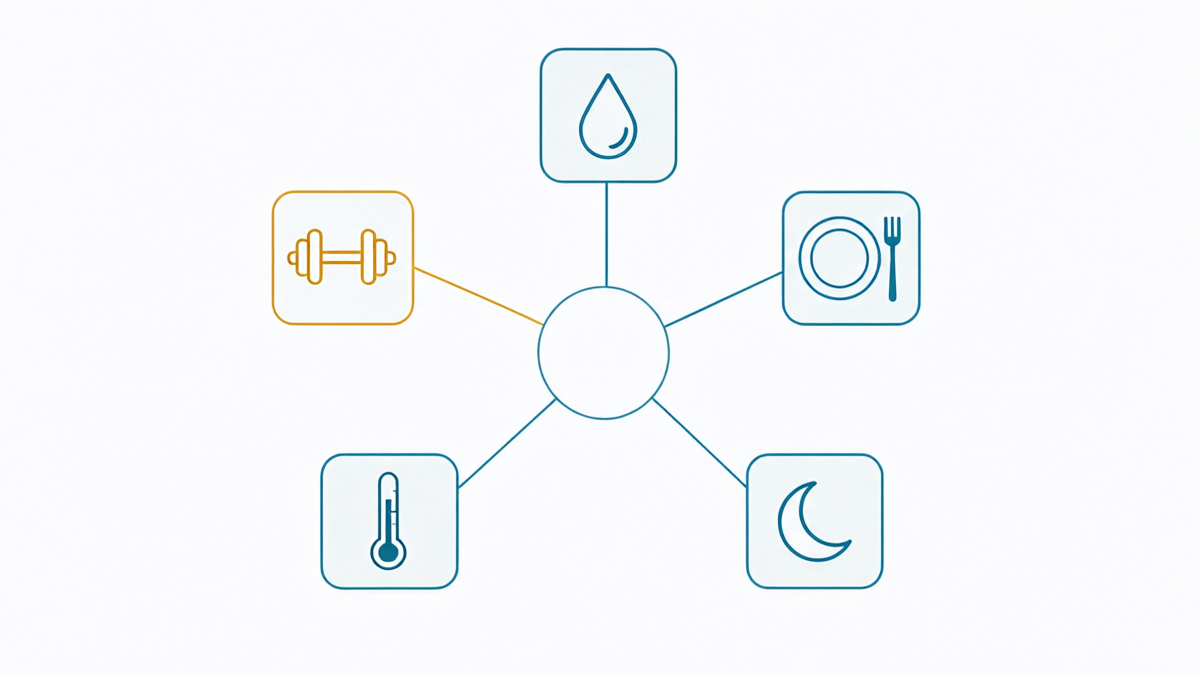
According to the Mayo Clinic and Cleveland Clinic, the main factors are:
- Muscle mass — the single biggest controllable factor; more lean muscle raises resting calorie burn.
- Body size — larger bodies need more energy to maintain.
- Sex — men typically carry more muscle and less fat, so burn more at rest.
- Age — BMR declines gradually with age as muscle is lost.
- Genetics, hormones and temperature — thyroid levels, genetics, illness, and extreme hot or cold all shift BMR up or down.
How to Increase Your BMR Naturally
The most reliable way to raise your BMR is to build and keep muscle through strength training—the Mayo Clinic calls muscle mass "a key factor" in how many calories you burn at rest. Support that with enough protein (which also has a higher thermic effect than carbs or fat), regular daily movement (NEAT, which Mayo estimates can account for 100 to 800 calories a day), good sleep, and staying hydrated. Be realistic about "foods that boost metabolism": coffee, green tea, chilli and protein give only small, short-lived bumps. There is no safe way to dramatically "boost metabolism in 7 days"—lasting change comes from muscle and consistent habits, not quick fixes.
Health & Medical Disclaimer
This BMR calculator and article are provided for general informational and educational purposes only and do not constitute medical advice. Results are estimates based on standard formulas and cannot account for individual differences in body composition, genetics, hormones, medications, or medical conditions. Always consult a qualified healthcare provider, registered dietitian, or doctor before making significant changes to your diet, calorie intake, or exercise routine—especially if you are pregnant or breastfeeding, under 18, over 65, have a medical condition (such as a thyroid disorder, diabetes, or an eating disorder), or take medication that affects metabolism. Eating below your BMR for prolonged periods can be harmful and should only be done under professional supervision.
Frequently Asked Questions About BMR & Calorie Targets
What is a BMR calculator and how does it work?
A BMR calculator estimates your Basal Metabolic Rate—the calories your body burns at complete rest for breathing, circulation, and cell repair—using your age, gender, height, and weight in a validated equation such as Mifflin-St Jeor. The Cleveland Clinic notes BMR makes up 60% to 70% of your daily calorie use, so it is the foundation for any nutrition plan.
Should I use BMR or TDEE to lose weight?
Use TDEE. BMR is only your resting baseline; TDEE adds the calories you burn through activity and is the number you create a deficit from. Subtract 300 to 500 calories from your TDEE for steady loss. The Mayo Clinic explains that activity and non-exercise movement (NEAT) are what separate TDEE from BMR.
Should I eat my BMR to lose weight, or go below it?
Eating around your BMR can be an effective floor for weight loss, but routinely eating well below it is not recommended—it can cause muscle loss, fatigue, and nutrient shortfalls. Any deficit is calculated from TDEE, not from BMR, and NICE frames the goal as a rate of loss of at most 0.5 to 1 kg per week rather than as a calorie floor. Intakes below your BMR should be supervised by a doctor or a registered dietitian. The Cleveland Clinic notes very low intake can prompt the body to conserve energy.
How much should I eat to lose weight if my BMR is 1,400 or 1,500?
Calculate your TDEE first (BMR × activity factor), then subtract 300 to 500 calories. For a BMR of 1,400 and light activity, that lands near 1,400 to 1,500 calories—right at your BMR floor. For a BMR of 1,500, the same arithmetic lands near 1,550 to 1,600 — again close to BMR rather than below it. The NHS gives average maintenance needs of ~2,000 kcal (women) and ~2,500 kcal (men) as context.
How many calories should I eat if my BMR is 2,500 to lose weight?
With a BMR of 2,500 and moderate activity, your TDEE is roughly 3,875 calories, so a 500 to 750 calorie deficit means eating about 3,100 to 3,375—comfortably above your BMR. A larger body gives you more room to cut calories safely while still losing weight, per general guidance from the Mayo Clinic.
If I eat 1,400 calories and burn 500, am I still in a calorie deficit?
Almost certainly yes. Your deficit is TDEE minus food intake, and exercise raises TDEE. Eating 1,400 while your total daily burn is 1,900 to 2,400 leaves a clear deficit. Just avoid letting food intake fall far under your BMR. Maintenance figures from the NHS help you sense-check whether 1,400 is a deficit for you.
What is a good BMR, and how much BMR is healthy?
There is no universal "healthy" BMR—it scales with body size, age, sex, and muscle. Men commonly fall around 1,600 to 1,900 and women around 1,300 to 1,500 calories at rest. A number that fits your size is healthy; focus on your own value rather than comparisons. The Cleveland Clinic lists body size, muscle, sex, and age as the main drivers.
Which BMR formula is most accurate: Harris-Benedict or Mifflin-St Jeor?
Mifflin-St Jeor is generally the most accurate for the general population. The original 1990 study in The American Journal of Clinical Nutrition found the older Harris-Benedict equations overestimated resting energy expenditure by about 5%. If you know your body fat percentage, Katch-McArdle can be more accurate still.
What are 5 factors that affect BMR?
Muscle mass, body size, sex, age, and hormones/genetics (including thyroid function and temperature). Muscle mass is the most controllable—building lean tissue raises resting calorie burn. The Mayo Clinic calls muscle mass a key factor, and the Cleveland Clinic adds genetics and hormones.
How can I increase my BMR, and what foods speed up metabolism?
Build muscle with strength training, eat enough protein, move more throughout the day, sleep well, and stay hydrated. Foods like coffee, green tea, chilli, and protein give only small, temporary boosts. The Mayo Clinic stresses that muscle mass and activity—not special foods—are what meaningfully change calorie burn.
Is a higher BMR better?
Not inherently. A higher BMR usually just reflects a larger or more muscular body burning more calories at rest—useful if you want to eat more while staying lean, but it is not a health grade. What matters is matching your intake to your own BMR and goals. Muscle is the healthiest way to raise it, per the Mayo Clinic.
How do I calculate BMR for a female?
Use the Mifflin-St Jeor women's formula: (10 × weight in kg) + (6.25 × height in cm) − (5 × age) − 161. For example, a 30-year-old woman at 65 kg and 165 cm has a BMR of about 1,370 calories. Enter your details in the calculator above for an instant result.
Does BMR change as I lose weight, and how often should I recalculate?
Yes—as you lose weight you have less body mass to maintain, so BMR drops, which is why weight loss can plateau. Recalculate every 4 to 6 kg of change, or every 2 to 3 months during active dieting, to keep your targets accurate. Because muscle drives resting burn, strength training helps limit the drop, as the Mayo Clinic explains.
Sources and References
- Cleveland Clinic — Basal Metabolic Rate (BMR)
- Mifflin MD, St Jeor ST, et al. (1990), The American Journal of Clinical Nutrition — A new predictive equation for resting energy expenditure in healthy individuals
- Mayo Clinic — Metabolism and weight loss: How you burn calories
- NHS — Understanding calories
- NICE — Obesity: identification, assessment and management (CG189) — how much weight should you lose
- World Health Organization — Physical activity fact sheet (adults 18 to 64)
Content last reviewed: 16 October 2026. This page is reviewed against Cleveland Clinic, Mayo Clinic, NHS and peer-reviewed research, and is provided for general information — it is not medical advice.