
Calorie Calculator: Find Your Daily Calorie Needs
Use this free calorie calculator using mifflin st jeor equation to find out how many calories you need each day to maintain, lose or gain weight. Enter your age, sex, height, weight and activity level below, and get your Basal Metabolic Rate (BMR), your maintenance calories (TDEE), a full table of calorie targets for every goal, and a suggested protein, carb and fat split.
Calculate your daily calorie needs now using the Mifflin-St Jeor equation
Calorie Calculator
What Is a Calorie Calculator and How Does It Work?
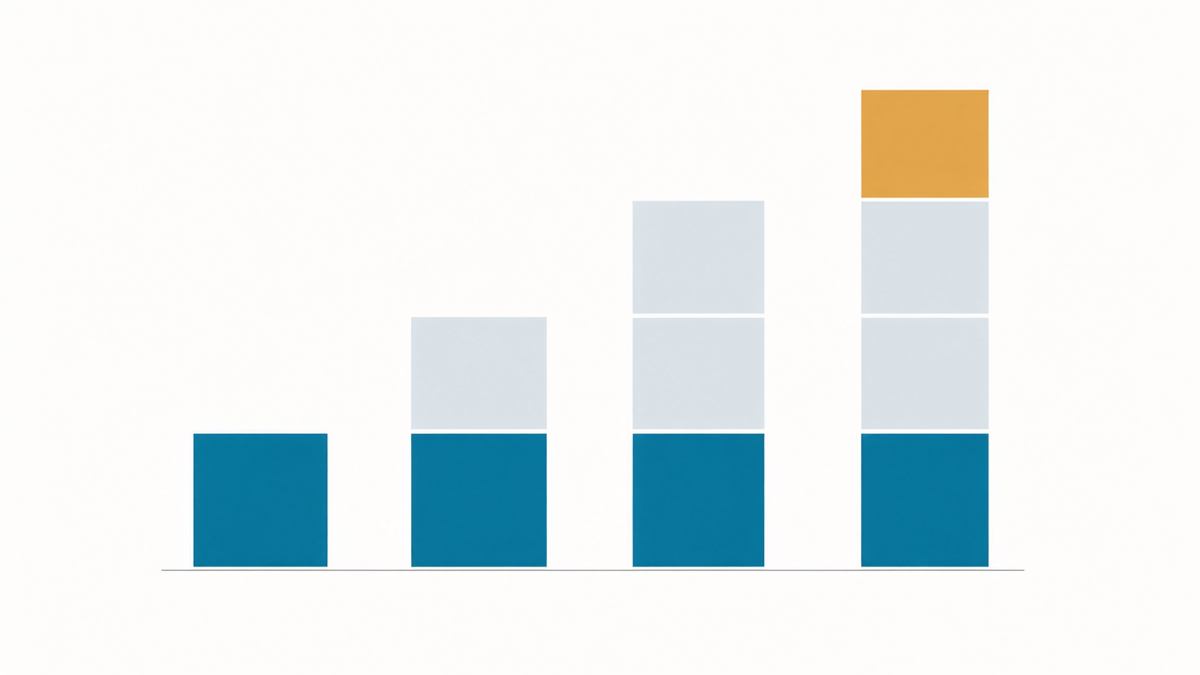
A calorie calculator estimates how much energy (in calories) your body burns in a day, then uses that number to work out how much you should eat to maintain, lose or gain weight. It does this in two steps. First it estimates your Basal Metabolic Rate (BMR) – the calories your body burns at complete rest just to keep your heart, lungs, brain and other organs running. Then it multiplies your BMR by an activity factor to estimate your Total Daily Energy Expenditure (TDEE), which is the calories you burn across a full day including movement and exercise.
Your TDEE is your maintenance calorie level – eat roughly that amount and your weight should stay stable. Eating consistently below it creates a calorie deficit for weight loss; eating above it creates a calorie surplus for weight gain. This calculator gives you all three numbers in one result, along with a daily calorie intake target and a starting macro split.
The Formula: Mifflin-St Jeor vs. Harris-Benedict
This calculator offers two validated BMR formulas.
Mifflin-St Jeor Equation (recommended default)
Published in 1990 and the formula most widely recommended by the Academy of Nutrition and Dietetics for the general population, since modern validation studies find it the most accurate of the common equations for both healthy-weight and overweight adults.
- Men: BMR = 10 x weight (kg) + 6.25 x height (cm) – 5 x age (years) + 5
- Women: BMR = 10 x weight (kg) + 6.25 x height (cm) – 5 x age (years) – 161
Harris-Benedict Equation (revised 1984 version)
An older formula, originally from 1919 and revised in 1984, still used in some clinical settings. It tends to estimate slightly higher than Mifflin-St Jeor for many people.
- Men: BMR = 88.362 + (13.397 x weight in kg) + (4.799 x height in cm) – (5.677 x age)
- Women: BMR = 447.593 + (9.247 x weight in kg) + (3.098 x height in cm) – (4.330 x age)
Both formulas then multiply BMR by an activity multiplier to get TDEE:
| Activity level | Description | Multiplier |
|---|---|---|
| Sedentary | Little or no exercise, desk job | 1.2 |
| Lightly active | Light exercise 1-3 days a week | 1.375 |
| Moderately active | Moderate exercise 3-5 days a week | 1.55 |
| Very active | Hard exercise 6-7 days a week | 1.725 |
| Extra active | Athlete-level training or a physically demanding job | 1.9 |
Calorie Calculator for Weight Loss: Setting Your Deficit
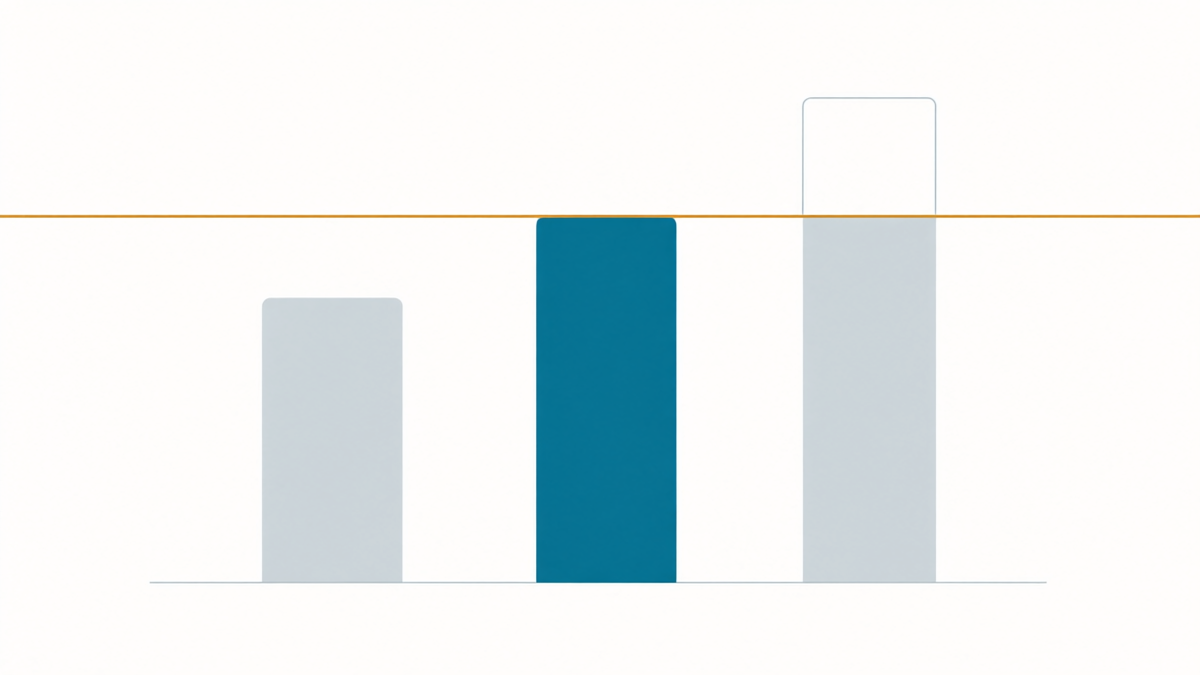
A calorie deficit calculator approach simply means eating less than your TDEE. One kilogram of body fat holds roughly 7,700 calories (about 3,500 calories per pound), so the deficit you choose determines how fast you lose weight:
- Mild deficit (-250 cal/day): about 0.25 kg (0.5 lb) a week – easiest to sustain, least muscle loss risk.
- Moderate deficit (-500 cal/day): about 0.5 kg (1 lb) a week – the most commonly recommended starting point.
- Aggressive deficit (-1,000 cal/day): about 1 kg (2 lb) a week – faster results, but harder to sustain and more likely to cost muscle as well as fat.
Most research-backed guidance, including from the NHS and CDC, favors losing no more than 0.5-1 kg (1-2 lb) a week for sustainable results. This calculator will not return a target below 1,200 calories a day, a widely used floor below which it becomes difficult to meet basic nutrient needs without medical supervision.
Calorie Calculator for Weight Gain and Bulking
Gaining weight works the same way in reverse: eat consistently above your TDEE.
- Mild surplus (+250 cal/day): a “lean bulk” pace of about 0.25 kg (0.5 lb) a week, which favors muscle gain over fat gain when paired with resistance training.
- Moderate surplus (+500 cal/day): roughly 0.5 kg (1 lb) a week, a common target for building muscle at a reasonable pace.
- Aggressive surplus (+1,000 cal/day): about 1 kg (2 lb) a week – faster scale-weight gain, but a larger share typically ends up as fat rather than muscle.
For most people trying to build muscle without excess fat gain, a mild-to-moderate surplus combined with resistance training and adequate protein outperforms an aggressive surplus.
Splitting Your Calories Into Macros
Calories are only half the picture – where they come from (protein, carbohydrate and fat) affects hunger, muscle retention and results. This calculator suggests a starting macro split based on your goal:
- Losing weight: higher protein (about 35% of calories) to help preserve muscle in a deficit, moderate carbs and fat.
- Maintaining weight: a balanced split of roughly 30% protein, 40% carbs, 30% fat.
- Gaining weight: more carbs (about 50%) to fuel training and support a surplus, with protein around 25%.
Protein and carbohydrate each provide about 4 calories per gram, and fat provides about 9 calories per gram – that’s how the calculator converts your percentage split into grams.
Average Calorie Needs by Age, Sex and Activity Level
These U.S. Dietary Guidelines reference ranges give a general sense of daily calorie needs before you run your own numbers above:
| Group | Sedentary | Moderately active | Active |
|---|---|---|---|
| Women, 19-30 | 1,800-2,000 | 2,000-2,200 | 2,400 |
| Women, 31-50 | 1,800 | 2,000 | 2,200 |
| Women, 51+ | 1,600 | 1,800 | 2,000-2,200 |
| Men, 19-30 | 2,400-2,600 | 2,600-2,800 | 3,000 |
| Men, 31-50 | 2,200-2,400 | 2,400-2,600 | 2,800-3,000 |
| Men, 51+ | 2,000-2,200 | 2,200-2,400 | 2,400-2,800 |
These are population averages for maintenance only; your own BMR, body composition and activity level mean your number can sit well outside these ranges, which is why a personal calculation matters more than a general chart.
Accuracy and Limitations of Calorie Calculators
Even the best equations are estimates, typically accurate to within about 10% for most healthy adults – useful as a starting point, not a guarantee. Results can be less reliable for people with a lot of muscle mass, a lot of body fat, older adults, or anyone with a metabolic or endocrine condition. Activity-level self-reporting is also a common source of error – most people overestimate how active they really are. Treat your result as a starting point: track your actual weight change over 2-3 weeks and adjust your calorie target up or down by 100-200 calories if the scale isn’t moving the way you expected.
Calorie Calculator vs. Food Tracking Apps
A calorie calculator like this one tells you the target – how many calories to aim for each day. A food tracking app (such as MyFitnessPal or Cronometer) tells you whether you’re hitting it, by logging what you actually eat. The two work together: use this calculator to set your number, then use a tracking app or a simple food diary to stay accountable to it.
Health and Medical Disclaimer: This calculator provides general estimates for informational and educational purposes only. It is not a substitute for professional medical, nutritional or fitness advice. Calorie needs vary by individual, and people who are pregnant or breastfeeding, have a diagnosed eating disorder, a chronic illness, or are under 18 should consult a doctor or registered dietitian before changing their calorie intake.
Frequently Asked Questions
How many calories should I eat a day to lose weight?
Most people lose weight sustainably by eating 500 calories a day below their maintenance level (TDEE), which produces roughly 0.5 kg (1 lb) of weight loss per week. Use the calculator above with “Lose weight” selected to get your personal number.
What is a calorie deficit and how big should it be?
A calorie deficit means eating fewer calories than your body burns in a day (your TDEE), which forces it to use stored fat for energy. A deficit of 250-500 calories a day is generally considered sustainable; larger deficits speed up loss but increase the risk of muscle loss, fatigue and rebound weight gain.
What is my maintenance calorie level?
Your maintenance calories, or TDEE, is the number of calories you can eat each day without gaining or losing weight. It equals your Basal Metabolic Rate multiplied by an activity factor based on how much you move and exercise. Select “Maintain weight” in the calculator above to see yours.
How many calories do I need to gain weight?
Eating 250-500 calories a day above your maintenance level (TDEE) typically produces 0.25-0.5 kg (0.5-1 lb) of weight gain per week. Pairing a moderate surplus with resistance training favors muscle gain over fat gain.
What’s the difference between BMR and TDEE?
BMR (Basal Metabolic Rate) is the calories your body burns at complete rest. TDEE (Total Daily Energy Expenditure) adds your activity and exercise on top of BMR, giving the full number of calories you burn – and should eat to maintain weight – in an average day.
Is the Mifflin-St Jeor or Harris-Benedict formula more accurate?
Mifflin-St Jeor (1990) is generally considered more accurate for most people today and is the formula recommended by the Academy of Nutrition and Dietetics. Harris-Benedict (revised 1984) is older and tends to estimate slightly higher; it’s included here for comparison and for anyone whose provider uses it.
How many calories should I eat based on my macros?
Macros (protein, carbohydrate and fat) should add up to your total calorie target, not replace it. This calculator suggests a percentage split based on your goal and converts it to grams – protein and carbs provide about 4 calories per gram, fat about 9 calories per gram.
Does this calculator work in both kg and lb?
Yes. Use the Metric (kg/cm) or Imperial (lb/ft-in) toggle at the top of the calculator to switch units – your results update using whichever you enter.
Is there a calorie calculator app?
This calculator works free in any mobile or desktop browser, so there’s nothing to download or install – just open this page on your phone or computer whenever you need to recheck your numbers.
Why do calorie calculators give different results?
Different calculators often use different BMR formulas (Mifflin-St Jeor vs. Harris-Benedict vs. Katch-McArdle) and different activity-multiplier definitions, which can shift results by a few hundred calories. All are estimates – the real test is tracking your actual weight over a few weeks and adjusting from there.
Related Calculators
- BMI Calculator – check your body mass index alongside your calorie needs.
- BMR Calculator – a deeper look at your Basal Metabolic Rate on its own.
- Navy Body Fat Calculator – estimate body fat percentage to track a cut or lean bulk.
Sources and References
- Mifflin MD, St Jeor ST, et al. “A new predictive equation for resting energy expenditure in healthy individuals.” American Journal of Clinical Nutrition, 1990 – PubMed
- Academy of Nutrition and Dietetics – Evidence Analysis Library, resting metabolic rate equations
- Centers for Disease Control and Prevention – Losing Weight
- NHS – Managing your weight safely
- U.S. Dietary Guidelines for Americans, 2020-2025 – Estimated Calorie Needs
Content last reviewed: October 19, 2026.