
Salary and Tax Calculator: Estimate Your 2026 Take-Home Pay
Your salary on paper is not the money that lands in your bank account. This salary and tax calculator estimates your take-home (net) pay after federal income tax, Social Security, Medicare, and your state’s income tax, using tax-year 2026 figures. Enter your gross pay, pick your filing status and state, and see what you actually keep — per year, month, bi-weekly paycheck, or week.
Salary and Tax Calculator (2026)
Estimate your U.S. take-home pay after federal income tax, Social Security, Medicare and state income tax.
| Take-home | Annual | Monthly | Bi-weekly | Weekly |
|---|
Figures use tax year 2026 federal brackets and standard deduction (IRS Rev. Proc. 2025-32), the 2026 Social Security wage base of $184,500 (SSA), and a flat state rate you can edit. This is an estimate for single-job wage income only and is not tax advice; it excludes local taxes, itemized deductions, credits, and other withholdings. Confirm figures with the IRS and your state tax agency.
What is a salary and tax calculator?
A salary and tax calculator estimates your net pay — the amount left after taxes and payroll withholdings are deducted from your gross salary. Gross pay is your stated wage; take-home pay is what remains after federal income tax, the two FICA payroll taxes (Social Security and Medicare), and any state income tax. Because the U.S. uses a progressive federal system and every state taxes income differently, the share you keep varies widely by income and location.
How to calculate your take-home pay
The calculator follows the same order a payroll department does:
- Start with annual gross pay. Hourly, weekly, bi-weekly or monthly figures are first converted to an annual amount.
- Subtract pre-tax deductions (such as traditional 401(k) or HSA contributions) to find income subject to income tax.
- Subtract the standard deduction to reach federal taxable income.
- Apply the 2026 federal tax brackets to that taxable income.
- Add FICA — 6.2% Social Security (up to the wage base) and 1.45% Medicare on all wages.
- Add state income tax using your state’s rate.
- Subtract all of the above from gross pay to get take-home pay.
2026 federal income tax brackets
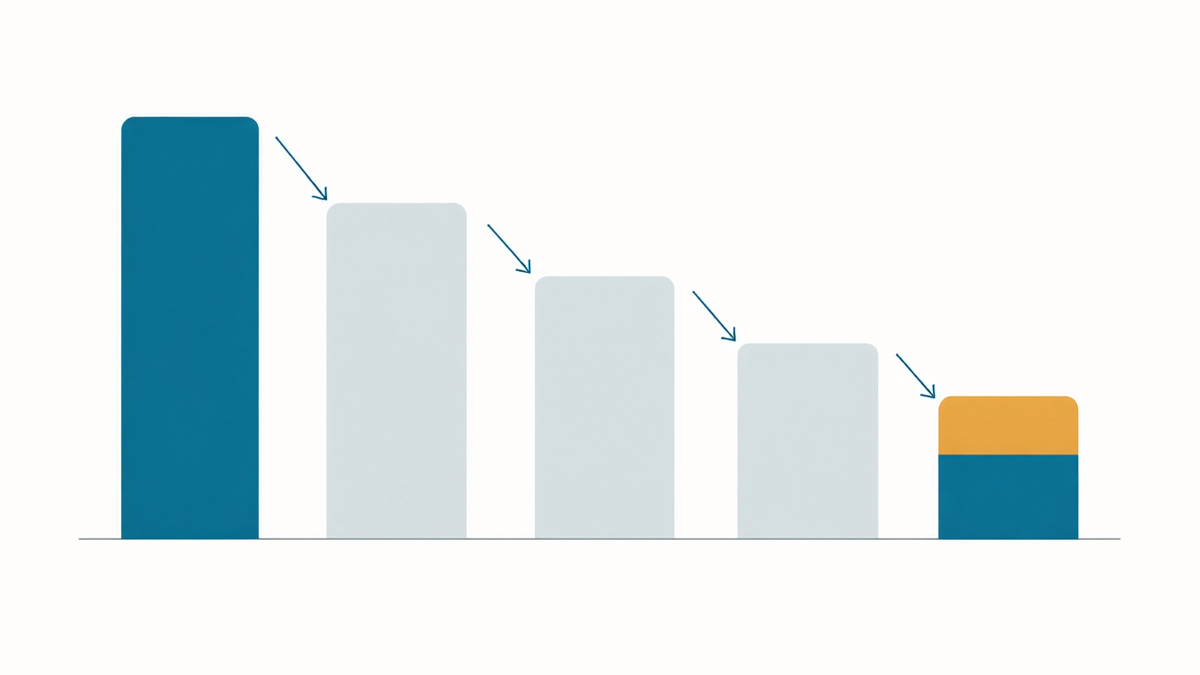
Federal income tax is progressive: each rate applies only to the income inside that band, not to your whole salary. For tax year 2026 there are seven rates — 10%, 12%, 22%, 24%, 32%, 35% and 37% — and the thresholds were set by the IRS in Revenue Procedure 2025-32.
| Rate | Single | Married filing jointly | Head of household |
|---|---|---|---|
| 10% | $0 – $12,400 | $0 – $24,800 | $0 – $17,700 |
| 12% | $12,400 – $50,400 | $24,800 – $100,800 | $17,700 – $67,450 |
| 22% | $50,400 – $105,700 | $100,800 – $211,400 | $67,450 – $105,700 |
| 24% | $105,700 – $201,775 | $211,400 – $403,550 | $105,700 – $201,750 |
| 32% | $201,775 – $256,225 | $403,550 – $512,450 | $201,750 – $256,200 |
| 35% | $256,225 – $640,600 | $512,450 – $768,700 | $256,200 – $640,600 |
| 37% | Over $640,600 | Over $768,700 | Over $640,600 |
2026 standard deduction
Most workers subtract the standard deduction before the brackets apply. For 2026 it is $16,100 for single filers, $32,200 for married couples filing jointly, and $24,150 for heads of household.
Social Security and Medicare (FICA)
FICA payroll taxes come out of nearly every paycheck and are separate from income tax. In 2026, per the Social Security Administration:
- Social Security: 6.2% of wages up to a wage base of $184,500 (a maximum of $11,439). Earnings above the base are not subject to Social Security tax.
- Medicare: 1.45% on all wages, with no cap.
- Additional Medicare Tax: an extra 0.9% on wages above $200,000 (single) or $250,000 (married filing jointly).
State income tax by state
State income tax is the piece that swings take-home pay the most between locations. In 2026, nine states levy no tax on wage income, 15 use a single flat rate, and the rest use graduated brackets. The calculator fills in an editable default rate when you choose your state; adjust it to your exact rate for the most accurate result.
States with no income tax on wages: Alaska, Florida, Nevada, New Hampshire, South Dakota, Tennessee, Texas, Washington, and Wyoming.
Flat-rate states (2026): Arizona 2.5%, Colorado 4.4%, Georgia 5.19%, Idaho 5.3%, Illinois 4.95%, Indiana 2.95%, Iowa 3.8%, Kentucky 3.5%, Louisiana 3.0%, Michigan 4.25%, Mississippi 4.0%, North Carolina 3.99%, Ohio 2.75%, Pennsylvania 3.07%, Utah 4.5%.
Graduated-rate states (such as California, New York, New Jersey, Oregon and Hawaii) apply rising rates as income grows; the default shown is a mid-range estimate, so higher or lower earners should edit it. State figures are drawn from the Tax Foundation’s 2026 state income tax tables.
Take-home pay by salary (single filer, no state tax)
A quick reference for a single filer in a no-income-tax state, using 2026 federal brackets and FICA. Your own result will differ with state tax, filing status and deductions.
| Gross salary | Federal tax | FICA | Take-home pay | Effective rate |
|---|---|---|---|---|
| $40,000 | ~$2,620 | ~$3,060 | ~$34,320 | ~14.2% |
| $50,000 | ~$3,820 | ~$3,825 | ~$42,355 | ~15.3% |
| $75,000 | ~$7,670 | ~$5,738 | ~$61,593 | ~17.9% |
| $100,000 | ~$13,170 | ~$7,650 | ~$79,180 | ~20.8% |
| $150,000 | ~$24,734 | ~$11,475 | ~$113,791 | ~24.1% |
How filing status changes your tax
Your filing status sets both your standard deduction and your bracket widths. Married couples filing jointly get a standard deduction roughly double a single filer’s and wider brackets, so a married worker usually keeps more of the same salary than a single worker. Head of household sits between the two. The calculator recalculates all of this when you switch status.
Hourly, weekly and monthly pay
You can enter pay at whatever frequency you are paid. The tool annualizes it first, so an hourly wage (at your weekly hours), a weekly or bi-weekly paycheck, or a monthly figure all produce the same annual tax result — then it divides your net pay back into annual, monthly, bi-weekly and weekly amounts so you can budget by paycheck.
Pre-tax deductions and your take-home pay
Contributions to a traditional 401(k), 403(b), HSA, or similar pre-tax account lower the income on which federal and state income tax are calculated, which reduces your tax bill. Note that Social Security and Medicare are still charged on your full wages, so pre-tax retirement savings cut income tax but not FICA. Enter your annual pre-tax contributions in the optional field to see the effect.
How to increase your take-home pay
- Contribute to pre-tax accounts to shrink your taxable income.
- Check your filing status and W-4 so you are not over-withholding.
- Factor in state taxes when comparing job offers in different states — a higher gross in a high-tax state can net less than a lower gross in a no-tax state.
- Claim credits you qualify for when you file; this calculator estimates withholding-style taxes only, not credits.
Salary calculator vs paycheck calculator
A salary (take-home) calculator like this one estimates your annual and per-paycheck net pay from gross salary. A full paycheck calculator may also model post-tax deductions such as health-insurance premiums, garnishments, and employer-specific withholdings. For most people comparing offers or budgeting, the salary-tax view here is enough; for an exact paycheck, confirm with your employer’s payroll system.
Financial Disclaimer
This salary and tax calculator is for general educational and informational purposes only and does not constitute tax, legal, or financial advice. It produces estimates for single-job wage income using tax-year 2026 federal figures and an editable flat state rate, and it does not account for local income taxes, itemized deductions, tax credits, multiple jobs, self-employment income, or every state-specific rule. Tax laws change and individual circumstances vary. Verify any figure with the IRS and your state tax agency, and consult a qualified tax professional before making financial decisions.
Frequently asked questions
How do I calculate my take-home pay? Subtract federal income tax, Social Security (6.2%), Medicare (1.45%), and your state income tax from your gross pay. Pre-tax deductions like a 401(k) reduce the income subject to income tax first. This calculator does all of that automatically.
What is take-home pay on a $100,000 salary? For a single filer in a no-income-tax state in 2026, roughly $79,000 after federal tax and FICA — about a 20.8% effective tax rate. State income tax, filing status, and deductions change the result.
How much is taken out of my paycheck for taxes? For most middle-income workers, total withholding runs from about 15% to 25% of gross pay once federal income tax, Social Security, Medicare, and state tax are combined. The exact share rises with income because federal tax is progressive.
Which states have no income tax? Alaska, Florida, Nevada, New Hampshire, South Dakota, Tennessee, Texas, Washington, and Wyoming do not tax wage income in 2026.
Does the calculator include Social Security and Medicare? Yes. It applies 6.2% Social Security up to the $184,500 wage base and 1.45% Medicare on all wages, plus the 0.9% Additional Medicare Tax on high earners.
Is the state tax rate exact? The state rate is an editable estimate. The dropdown fills a representative 2026 rate for your state; graduated-rate states vary by income, so edit the field to your exact rate for precision.
What is the difference between gross and net pay? Gross pay is your salary before any deductions. Net pay, or take-home pay, is what remains after taxes and withholdings.
Why is my actual paycheck different? Employers may also withhold health insurance, retirement, and other items, and your W-4 settings affect withholding. This tool estimates taxes only, so treat it as a close guide rather than an exact paycheck.
Can I use this for hourly wages? Yes. Choose “Hourly,” enter your hourly rate and weekly hours, and the calculator annualizes your pay before applying taxes.
Does it account for pre-tax 401(k) contributions? Yes. Enter your annual pre-tax contributions and the calculator lowers your income-tax base accordingly, while still charging Social Security and Medicare on full wages.
Sources and References
- IRS Revenue Procedure 2025-32 — 2026 inflation adjustments (tax brackets and standard deduction)
- IRS — Tax inflation adjustments for tax year 2026
- Social Security Administration — 2026 Social Security changes (wage base, FICA)
- Tax Foundation — State Individual Income Tax Rates and Brackets, 2026
Content last reviewed: 20 October 2026.