
Shariah-Compliant Mortgage Calculator: Halal Home Finance
A Shariah-compliant mortgage calculator estimates what a halal, interest-free home-finance arrangement would cost you each month. Instead of charging riba (interest), Islamic home finance uses asset-backed contracts such as diminishing Musharakah, Ijara and Murabaha, where the provider earns a disclosed profit or rent rather than interest. Enter your property price, deposit, term and profit or rental rate below, choose the structure your provider uses, and the calculator shows your estimated monthly payment and total cost.
Shariah-Compliant Loan and Mortgage Calculator
Estimate halal, interest-free (riba-free) home-finance payments across the main Islamic contracts.
Estimated monthly payment
What is a Shariah-compliant loan or mortgage?
A Shariah-compliant loan or mortgage is home or asset finance structured to follow Islamic law, which prohibits paying or receiving interest (riba). Rather than lending money at interest, the financier participates in the transaction as a buyer, seller, landlord or partner, and earns a transparent, pre-agreed profit or rent. Contracts must also avoid excessive uncertainty (gharar), gambling (maysir) and funding prohibited industries, and both sides genuinely share risk. These principles are codified by standard-setters such as AAOIFI and the Islamic Financial Services Board.
In the UK these products are usually called Home Purchase Plans (HPPs) and are regulated like conventional mortgages; in the US and elsewhere they are offered by dedicated Islamic finance providers. Both Muslims and non-Muslims can apply, and lenders still run credit and affordability checks.
How is a halal mortgage different from interest?
The difference is the source of the provider’s return. A conventional mortgage lends you money and charges interest on the outstanding balance; the lender profits from the loan itself. A halal mortgage is built around a real asset: the provider buys the property and then sells it to you at a markup, leases it to you for rent, or co-owns it with you and charges rent on its share. The profit is tied to the asset and is fixed or disclosed up front, and the provider carries some ownership risk along the way. Economically the monthly figure can look similar to interest, but the contract, the risk-sharing and the way the return is earned are structurally different.
Types of Shariah-compliant home finance
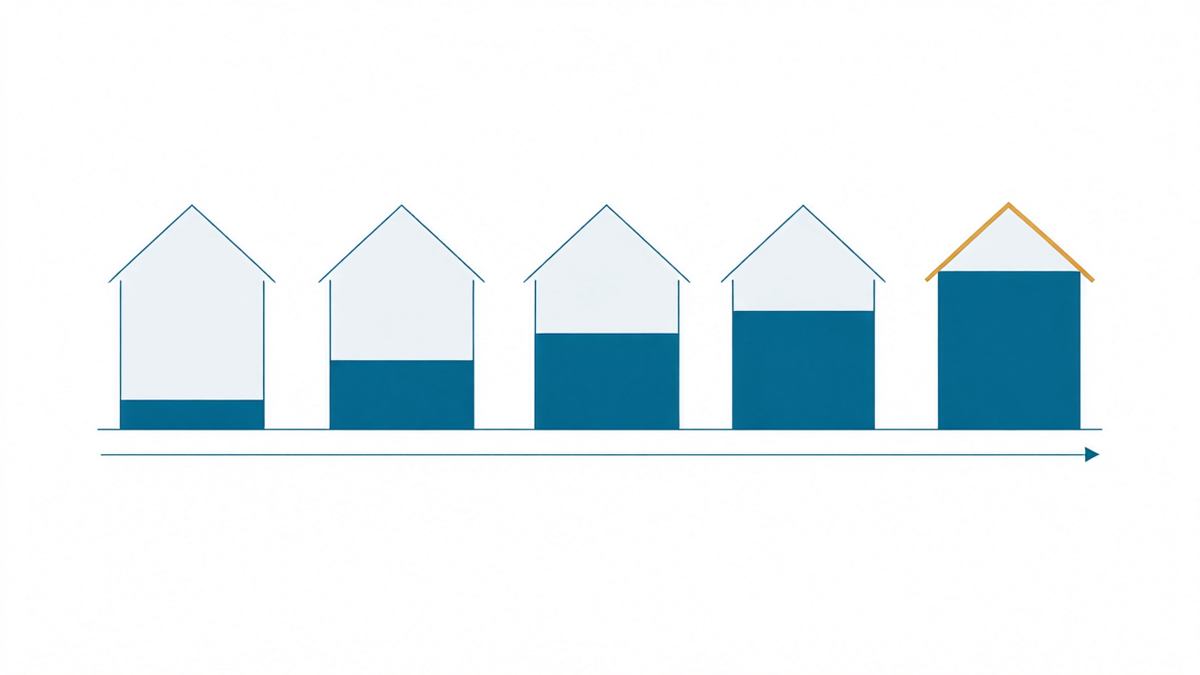
Most Islamic mortgages use one of four contracts. The right one for you depends on what your provider offers and whether you want to build ownership over time or simply lease.
Diminishing Musharakah (co-ownership) — the most common
You and the financier jointly buy the property, each holding a share in proportion to your deposit and their funding. Each monthly payment does two things: it pays rent on the share the financier still owns, and it buys back a slice of that share. As your ownership grows, the financier’s share shrinks, so the rent portion falls over time until you own the home outright. This is the dominant structure for UK and US residential halal mortgages (Investopedia: Musharakah).
Ijara (lease-to-own)
The financier buys the property and leases it to you. You pay rent for the term, and ownership transfers to you at the end — by gift or for a nominal, pre-agreed amount. Ijara behaves like an interest-only arrangement: you are not usually building equity month by month, so it is often used for buy-to-let or combined with a separate savings plan (Investopedia: Ijarah).
Murabaha (cost-plus sale)
The financier buys the asset and immediately resells it to you at a higher, fixed price — the cost plus an agreed profit markup — which you repay in equal instalments. The total is locked in at signing and never changes with market rates. In the UK, Murabaha is used more for commercial property and vehicles than for homes (Investopedia: Murabaha).
Qard Hasan (benevolent loan)
A Qard Hasan is an interest-free, profit-free loan: you repay exactly what you borrowed. It is used for benevolent or community lending rather than commercial mortgages, though the provider may recover genuine administrative costs.
How the calculator works for each structure
In short: the calculator subtracts your deposit from the price to get the financed amount, then applies the maths of the contract you select.
- Diminishing Musharakah: a level monthly payment is computed over the term so the financier’s share is fully bought out by the end, with each payment split into rent on the remaining share plus equity purchase. The rent portion is highest at the start and shrinks as your share grows.
- Ijara: monthly rent is the financed amount multiplied by the annual rental rate, divided by twelve. The capital is settled separately when ownership transfers at the end of the term.
- Murabaha: you enter the total agreed profit markup (not an annual rate). The sale price is the financed amount plus that markup, repaid in equal instalments across the term.
- Qard Hasan: the financed amount is simply divided by the number of months, with no profit added.
Profit rate vs interest rate — what to enter
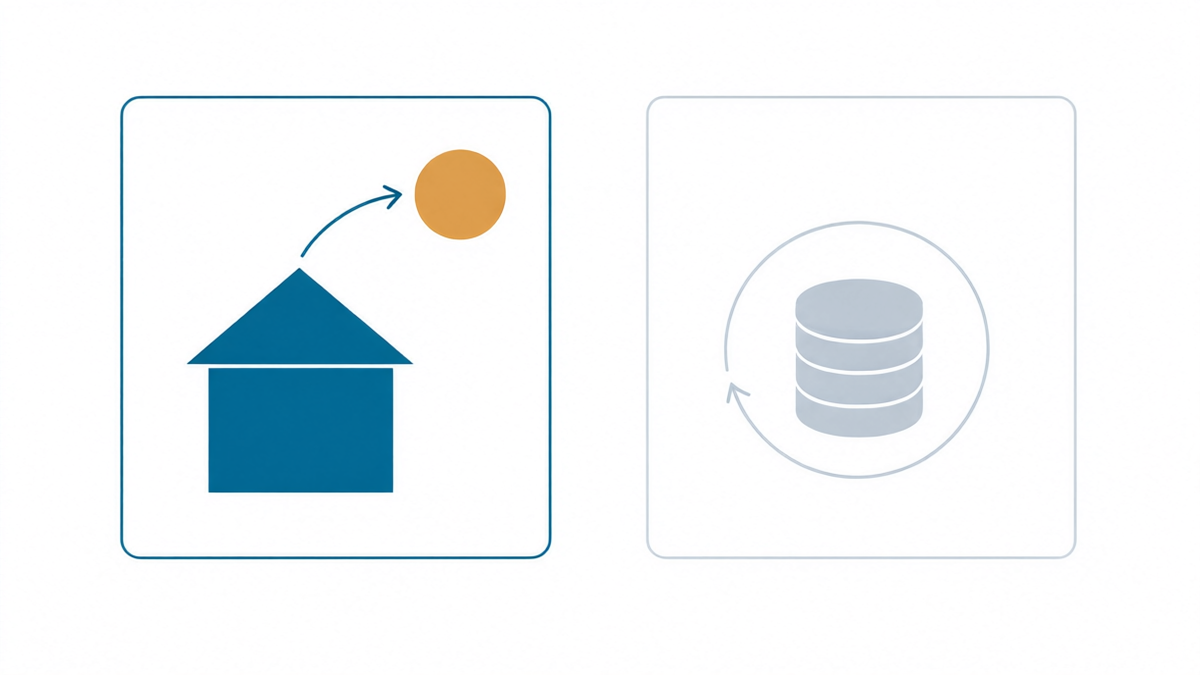
The “rate” in Islamic finance is a profit rate or rental rate, not an interest rate, but you enter it the same way. Providers often benchmark it against reference rates (for example a published interbank or term reference rate plus a margin), and it may be fixed for an initial period and then reviewed. For a realistic estimate, use the profit or rental rate your provider quotes. For Murabaha, enter the whole markup percentage instead, because that profit is a single disclosed figure rather than an annual charge.
Worked example
Suppose a property costs 300,000, you put down a 20% deposit (60,000), and the financed amount is 240,000 over 25 years at a 5% profit/rental rate:
- Diminishing Musharakah: roughly 1,400 per month, with the first month split about 1,000 rent and 400 equity; total paid over the term around 420,000.
- Ijara: about 1,000 per month in rent, plus the 240,000 capital settled at the end.
- Murabaha (entering a 25% total markup): a fixed sale price of 300,000, repaid at about 1,000 per month.
- Qard Hasan: 800 per month, repaying only the 240,000 borrowed.
These are illustrations only; your provider’s exact figures depend on its pricing, fees and rate reviews.
How much deposit do you need?
Deposits for halal mortgages are broadly comparable to conventional ones, typically ranging from about 5% to 35% of the property value depending on the provider and product, with many residential plans sitting around 10–20%. A larger deposit means a larger starting ownership share in a Musharakah and a smaller financed amount, which lowers the rent and total cost.
Are halal mortgages more expensive?
They can be slightly more expensive than the cheapest conventional deals, mainly because there is less competition and higher administration and legal costs, not because the underlying concept costs more. Fees are otherwise similar — arrangement, valuation and legal fees — and in the UK stamp duty is not charged twice despite the two property transfers. Always compare the total amount payable across products rather than the headline rate.
Who offers Shariah-compliant mortgages?
In the UK, specialist providers and Islamic banks offer FCA-regulated Home Purchase Plans. In the US, dedicated Islamic finance companies offer diminishing-Musharakah and Murabaha home finance. Availability, deposit rules and pricing vary by country and provider, so this calculator is a planning tool — confirm the exact structure and figures with a provider before you commit. Consumer overviews such as NerdWallet UK and Uswitch explain the current market.
Shariah-compliant vs conventional mortgage
| Feature | Shariah-compliant (halal) | Conventional |
|---|---|---|
| Provider’s return | Profit, rent or markup on a real asset | Interest on a loan |
| Risk | Shared via ownership | Borne by borrower |
| Rate type | Profit / rental rate (often fixed then reviewed) | Interest rate (fixed or variable) |
| Early repayment | Usually no penalty | May carry early-repayment charges |
| Who can apply | Muslims and non-Muslims | Anyone eligible |
Related calculators
Plan the rest of your finances with these tools: the currency converter, the retirement savings calculator, and the interest-free investment growth calculator.
Financial Disclaimer
This calculator and article are for general information and estimation only and do not constitute financial, legal or religious advice. Results are illustrative and will differ from any provider’s actual offer, which depends on its pricing, fees, rate reviews and underwriting. Whether a specific product is Shariah-compliant is determined by that provider’s own Shariah supervisory board. Consult a qualified Islamic finance advisor and a regulated mortgage provider before making any decision.
Frequently asked questions
Is a Shariah-compliant mortgage really interest-free?
Yes — no interest (riba) is charged. The provider instead earns a profit, rent or markup tied to a real asset, which is disclosed in the contract.
What is the most common type of Islamic mortgage?
Diminishing Musharakah (co-ownership) is the most common for residential homes, because it lets you build ownership over the term until you own the property outright.
Can non-Muslims get a halal mortgage?
Yes. Halal mortgages are open to everyone; providers assess credit and affordability in the usual way.
Is a halal mortgage more expensive than a normal one?
It can be slightly more expensive due to less competition and higher admin costs, but not always. Compare the total amount payable rather than the headline rate.
What deposit do I need for an Islamic mortgage?
Typically around 5% to 35% of the property value depending on the provider, with many residential plans near 10–20%. A bigger deposit lowers your total cost.
What is the difference between a profit rate and an interest rate?
A profit or rental rate is the provider’s return on an asset-based contract, often benchmarked and fixed for a period; an interest rate is a charge on a loan balance. You enter the profit or rental rate into the calculator just as you would a rate.
What is diminishing Musharakah?
It is a co-ownership plan where you and the financier jointly own the property. Each payment pays rent on the financier’s share and buys part of it, so your ownership rises and the rent falls over time.
What is the difference between Murabaha and Ijara?
Murabaha is a cost-plus sale with a fixed total price repaid in instalments; Ijara is a lease where you pay rent and take ownership at the end of the term.
Are there early repayment penalties?
Most halal home-finance products do not charge early-repayment penalties, but check the specific contract, as terms vary by provider.
Is this calculator an offer of finance?
No. It is an educational estimation tool. Actual terms must come from a regulated provider and, where applicable, its Shariah supervisory board.
Sources and References
- AAOIFI — Accounting and Auditing Organization for Islamic Financial Institutions
- Islamic Financial Services Board (IFSB)
- Investopedia — Musharakah
- Investopedia — Ijarah
- Investopedia — Murabaha
- Investopedia — Riba
- NerdWallet UK — What is an Islamic mortgage?
- Uswitch — Islamic and halal mortgages guide
Content last reviewed: 19 October 2026.